
Get Free Ebook , by Phil Knight
Get Free Ebook , by Phil Knight
Now, invite guide vendor that will come to be the very best seller publication today. This is it publication. You may not really feel that you are not knowledgeable about this publication, may you? Yeah, practically everyone knows about this publication. It will certainly also undertake exactly how guide is actually supplied. When you can make the chance of guide with the good one, you can select it based on the reason and also recommendation of exactly how guide will certainly be.
, by Phil Knight

Get Free Ebook , by Phil Knight
This is your definitely time to find over as well as have certain behavior. Checking out as one the pastime to do can be done as routine. Also you could not have the ability to review daily, you option to select reading a publication to accompany in spare time is right sufficient. There are not all individuals have this way. Many additionally assume that reading will certainly be so monotonous.
Checking out becomes on part of the life that ought to be done by everyone. Reviewing need to be believed from earlier to be routine and pastime. Even there are lots of people with alternative hobbies; it does not imply that you can not take pleasure in reading as various other task. Reviewing , By Phil Knight is among the ways for you to boost your top quality of the life. It is such believed in the many resources.
Getting the competed material of the book even in the soft documents is really impressive. You can see just how the , By Phil Knight is presented. Prior to you get guide, you might not know concerning just what the book is. However, for even more viable point, we will certainly share you little bit concerning this book. This is guide to recommend that gives you a good thing to do. It is also provided in extremely fascinating reference, instance, and also description.
Those are a few of advantages reading , By Phil Knight When you have actually made a decision to get and also check out the book, you have to allot the solution and also get the openly to check out till finished. This publication has the tendency to be a required publication to call for some duties as well as tasks. When other people are still bothered with the tasks and also deadline, you can really feel extra relaxed due to the fact that you have obtained guide perfectly.
Product details
File Size: 1135 KB
Print Length: 401 pages
Publisher: Scribner; Reprint edition (April 26, 2016)
Publication Date: April 26, 2016
Sold by: Amazon Digital Services LLC
Language: English
ASIN: B0176M1A44
Text-to-Speech:
Enabled
P.when("jQuery", "a-popover", "ready").execute(function ($, popover) {
var $ttsPopover = $('#ttsPop');
popover.create($ttsPopover, {
"closeButton": "false",
"position": "triggerBottom",
"width": "256",
"popoverLabel": "Text-to-Speech Popover",
"closeButtonLabel": "Text-to-Speech Close Popover",
"content": '
});
});
X-Ray:
Enabled
P.when("jQuery", "a-popover", "ready").execute(function ($, popover) {
var $xrayPopover = $('#xrayPop_5DCFCE42425311E9A700A4AF7E0B6102');
popover.create($xrayPopover, {
"closeButton": "false",
"position": "triggerBottom",
"width": "256",
"popoverLabel": "X-Ray Popover ",
"closeButtonLabel": "X-Ray Close Popover",
"content": '
});
});
Word Wise: Enabled
Lending: Not Enabled
Enhanced Typesetting:
Enabled
P.when("jQuery", "a-popover", "ready").execute(function ($, popover) {
var $typesettingPopover = $('#typesettingPopover');
popover.create($typesettingPopover, {
"position": "triggerBottom",
"width": "256",
"content": '
"popoverLabel": "Enhanced Typesetting Popover",
"closeButtonLabel": "Enhanced Typesetting Close Popover"
});
});
Amazon Best Sellers Rank:
#3,963 Paid in Kindle Store (See Top 100 Paid in Kindle Store)
Very pleasantly surprised at the power of this book! No co-author, apparently, and he certainly does not need one. The writing is impassioned, concise and insightful. I know some of the Nike story, but never the depth of the details and personalities as outlined here. Brought me back to the early to mid 70's when I worked for a small consumer electronics firm in the Midwest, the same period in this tale. Many of the incidents were similar - young, spirited individuals taking on an established industry and blazing a trail through dint of innovation, dedication and hard work. I later moved on to more "corporate" firms and financial planning but those days are firmly in memory and I can truly say those years were definitely part of my life's highlight reel in terms of what I could accomplish with a group of like minded souls. I would recommend this book to anyone considering taking entrepreneurial flight, if only to foretell a taste of how tough it can get and how rewarding it can be when it works.
Most business memoirs are self-serving, boring, and poorly written. To put it bluntly, they are “crap between covers.†There are very few business memoirs that are even good, since most of them make the person writing the memoir seem like a business savant who always knew the right answers and knew things would come out right. Great business memoirs are different. They portray a business situation as it was. Phil Knight’s Shoe Dog: A Memoir by The Creator of Nike is a great business memoir.Let’s cut to the chase. This will be a great read for anybody, but if you’re thinking about starting a business, especially a business that you expect to grow, this book belongs on your must-read list. You’ll learn things that you won’t learn anywhere else and you’ll learn things that you can only learn from a story.You’ll learn about the constant struggle to fund growth. Most of the books about entrepreneurship don’t tell you about that. If you start a business and that business starts to grow, you are funding the process out ahead of your cash flow. The result is that you’re chronically cash poor, even when you’re fabulously profitable, and that is both counterintuitive and very tough to manage.You’ll also learn about the plusses and minuses of going public. There’s a lot here about relationships and values, and staying true to what you think is important. There are lessons about how putting people in the right job makes all the difference. And, there are lessons about balancing being a hero at work with being a parent at home.There are also important lessons about not taking yourself too seriously. Knight describes the “executive retreats†that Nike would have. They called them “Buttface sessions.†The name came from one of the early employees who said that Nike was the only company their size where you could shout out “Hey, buttface!†and the entire management team would turn around.There’s another important thing, too. If you think that innovation is only something that high-tech companies do, or that it requires coding, read this book. A lot of Nike’s success comes from being an innovator in shoes.Shoe Dog is superbly written, and you’ll enjoy it if you just read it as a story. But if you’re in business, and especially if you’re starting a business and wanting to make it grow, this book should be on your must-read list. Keep it handy, right near Ben Horowitz’s The Hard Thing about Hard Things.Toward the end of the book, Phil Knight says this:“God, how I wish I could relive the whole thing. Short of that, I’d like to share the experience, the ups and downs, so that some young man or woman, somewhere, going through the same trials and ordeals might be inspired or comforted. Or warned. Some young entrepreneur, maybe, some athlete or painter or novelist, might press on.â€I think he achieved his goal. If you want some seasoned advice to help you run and grow your company, or if you just want to read a great business memoir, pick up a copy of Shoe Dog: A Memoir by The Creator of Nike.
It may seem surprising that a review of a “sports book†would appear on my site, where book reviews are essentially reserved for the domain of politics and economics. But that surprise would stem from a gigantic misunderstanding, for Shoedog is no “sports book.†Rather, it is a virtual economics textbook. And one every business student in America should read. Indeed, it is one a certain White House occupant should read as well.For those interested in sports, as I am, history, as I am, and business, as I am, this book was a tremendous synthesis of the three, in the particular context of describing the birth of one of the greatest brands in American history – indeed, in world history … I doubt the story of a company’s founding and rise to greatness has ever ended a couple decades before the company’s peak, but that is the genius of Shoedog. Nike founder, Phil Knight, begins the story of this iconic brand at the most embryonic of stages, and ends the story in 1980, at their public offering, despite two and a half decades of utter domination that commenced subsequently. The story of Nike to us mere mortals is Michael Jordan, Tiger Woods, Kobe Bryant, and “Just Do It.†But as readers of this fine book will discover, the real story of Nike took place in the late 1960’s and throughout the 1970’s, as the formative challenges that make a business took place. And if any company would become rightful heir to “Just Do It†— it was Nike.Nike has employed hundreds of thousands of people over the decades, and has created untold amounts of wealth by giving consumers something they wanted: Initially, a high quality running shoe; eventually, a brand — a belief — an affiliation. But the genius of finding future basketball, track, and golf stars to endorse the brand was a small part of the story of this company’s ascension. The genius that created Nike is the genius of this book: It focused on personnel management, on global cost synergies, on harnessing an international supply chain the likes of which the world had never seen, on overcoming legal adversity, and above all else, managing the challenges of liquidity and capital that nearly any company faces in the early innings of their existence. This is an economics book. It is a tribute to the miracle of free trade which has created more wealth than any other phenomena in the history of civilization. It is a rebuke of the evils of crony capitalism and those rent-seeking piranhas who would attempt to use government alliances to strangle healthy competition.We are living in an era when forces on the right and the left are capitulating to a childish view of globalization — one seeking to make it a bogeyman for anything and everything — and ignoring the absolutely indisputable evidence for the enhancement of quality of life globalization has created. Few companies better illustrate what matching willing buyers and sellers around the world can mean for consumers, for producers, for shareholders, for employees, and for indeed all stakeholders in a given organization than Nike. While countless others do, for it is a universal lesson, Nike is the story of a young man and his track coach creating $100 billion of wealth that has circulated across a vast, vast ecosystem, by understanding the miracles of global trade. I cannot recommend this book strongly enough for one looking for a biographical narrative version of an economics lesson, versus the academic attempts that often prove too dry. The story of Shoedog was anything but dry, and the message of Shoedog is anything but trite.
, by Phil Knight PDF
, by Phil Knight EPub
, by Phil Knight Doc
, by Phil Knight iBooks
, by Phil Knight rtf
, by Phil Knight Mobipocket
, by Phil Knight Kindle
, by Phil Knight PDF
, by Phil Knight PDF
, by Phil Knight PDF
, by Phil Knight PDF
PDF Download Lonely Planet Pocket Moscow & St Petersburg (Travel Guide), by Lonely Planet
PDF Download Lonely Planet Pocket Moscow & St Petersburg (Travel Guide), by Lonely Planet
Some individuals might be chuckling when checking out you checking out Lonely Planet Pocket Moscow & St Petersburg (Travel Guide), By Lonely Planet in your spare time. Some may be admired of you. And also some might want be like you which have reading leisure activity. Just what concerning your personal feeling? Have you felt right? Checking out Lonely Planet Pocket Moscow & St Petersburg (Travel Guide), By Lonely Planet is a demand and a leisure activity at once. This condition is the on that particular will make you feel that you need to check out. If you know are looking for guide entitled Lonely Planet Pocket Moscow & St Petersburg (Travel Guide), By Lonely Planet as the option of reading, you could discover here.

Lonely Planet Pocket Moscow & St Petersburg (Travel Guide), by Lonely Planet

PDF Download Lonely Planet Pocket Moscow & St Petersburg (Travel Guide), by Lonely Planet
Don't you think that reading publications will provide you more benefits? For all sessions and types of publications, this is thought about as one way that will certainly lead you to obtain finest. Each publication will certainly have various statement as well as various diction. Is that so? Exactly what about the book qualified Lonely Planet Pocket Moscow & St Petersburg (Travel Guide), By Lonely Planet Have you heard about this publication? Come on; do not be so careless to recognize more concerning a publication.
When Lonely Planet Pocket Moscow & St Petersburg (Travel Guide), By Lonely Planet is attended to you, it's clear that this publication is really compatible for you. The soft data concept of this additionally brings ease of exactly how you will delight in guide. Naturally, appreciating guide can be only done by reading. Reading guides will certainly lead you to always understand every word to write and every sentence to utter. Many people in some cases will have various methods to utter their words. Nonetheless, from the title of this book, we make sure that you have actually known exactly what anticipate from guide.
When some people believe that this is a hard book to check out, we will inform you that it becomes one of the smarter suggestions to find with something various. The various points of the Lonely Planet Pocket Moscow & St Petersburg (Travel Guide), By Lonely Planet with other publications are lasting heading exactly how the writer improvisate and choose the subject commonly and also interestingly. It will certainly be timeless and also countless making all people really feel decorated and also astonished of this publication.
It is so very easy, isn't it? Why don't you try it? In this site, you could also find various other titles of the Lonely Planet Pocket Moscow & St Petersburg (Travel Guide), By Lonely Planet book collections that might have the ability to aid you locating the most effective solution of your task. Reading this publication Lonely Planet Pocket Moscow & St Petersburg (Travel Guide), By Lonely Planet in soft file will certainly also ease you to obtain the resource quickly. You might not bring for those publications to somewhere you go. Only with the gizmo that consistently be with your almost everywhere, you could read this publication Lonely Planet Pocket Moscow & St Petersburg (Travel Guide), By Lonely Planet So, it will be so swiftly to complete reading this Lonely Planet Pocket Moscow & St Petersburg (Travel Guide), By Lonely Planet
Product details
Series: Travel Guide
Paperback: 192 pages
Publisher: Lonely Planet; 1 edition (March 20, 2018)
Language: English
ISBN-10: 1787011232
ISBN-13: 978-1787011236
Product Dimensions:
4.2 x 0.4 x 6 inches
Shipping Weight: 6.4 ounces (View shipping rates and policies)
Average Customer Review:
4.4 out of 5 stars
3 customer reviews
Amazon Best Sellers Rank:
#23,149 in Books (See Top 100 in Books)
Easy to read, easy to find appropriate section, great language learning mini unit.
It was smart to make a travel book with just these two cities in it. This was the perfect size and covered everything we needed to know for a three week trip to Moscow and St. Petersburg.
Seems accurate and is small enough to take with on walking tours.
Lonely Planet Pocket Moscow & St Petersburg (Travel Guide), by Lonely Planet PDF
Lonely Planet Pocket Moscow & St Petersburg (Travel Guide), by Lonely Planet EPub
Lonely Planet Pocket Moscow & St Petersburg (Travel Guide), by Lonely Planet Doc
Lonely Planet Pocket Moscow & St Petersburg (Travel Guide), by Lonely Planet iBooks
Lonely Planet Pocket Moscow & St Petersburg (Travel Guide), by Lonely Planet rtf
Lonely Planet Pocket Moscow & St Petersburg (Travel Guide), by Lonely Planet Mobipocket
Lonely Planet Pocket Moscow & St Petersburg (Travel Guide), by Lonely Planet Kindle
Lonely Planet Pocket Moscow & St Petersburg (Travel Guide), by Lonely Planet PDF
Lonely Planet Pocket Moscow & St Petersburg (Travel Guide), by Lonely Planet PDF
Lonely Planet Pocket Moscow & St Petersburg (Travel Guide), by Lonely Planet PDF
Lonely Planet Pocket Moscow & St Petersburg (Travel Guide), by Lonely Planet PDF
PDF Ebook , by Charles Massy
PDF Ebook , by Charles Massy
Understanding is a process that will certainly be gone through by all people in every age. In this situation, we have constantly guides that need to be gathered as well as check out. , By Charles Massy is just one of the books that we constantly advise for you in learning. This is the method just how you learn related to the topic. When you have the visibility of the books, you should see exactly how this book is truly suggested.
, by Charles Massy

PDF Ebook , by Charles Massy
After couple of time, finally guide that we and also you await is coming. So eased to obtain this fantastic book available to present in this website. This is guide, the DDD. If you still feel so difficult to obtain the published publication in the book shop, you could accompany us again. If you have actually ever before got the book in soft file from this book, you could conveniently get it as the referral now.
The initial factor of why selecting this book is since it's provided in soft data. It means that you can wait not only in one device but additionally bring it all over. , By Charles Massy will certainly include just how deep guide will certainly provide for you. It will provide you something new. Even this is just a publication; the visibility will truly show how you take the ideas. And currently, when you truly need to make handle this book, you could begin to get it.
By obtaining the , By Charles Massy in soft documents, as talked previously, many advantages can be gotten. Besides, as what you recognize, this publication provides fascinating statement that makes people interested to read it. When you decide to read this publication, you could start to recognize that book will always offer advantages. This book is extremely basic as well as offers large results.
After obtaining the web link, it will certainly additionally make you really feel so easy. This is not your time to be puzzled. When guide is collected in this website, it can be got conveniently. You can additionally save it in various tools so that you could take it as reading materials wherever you are. So currently, let's seek for the motivating resources that are easy to obtain. Obtain the different methods from various other to ease you really feel so easy in obtaining the resources.
Product details
File Size: 25922 KB
Print Length: 528 pages
Publisher: Chelsea Green Publishing (August 31, 2018)
Publication Date: August 31, 2018
Sold by: Amazon Digital Services LLC
Language: English
ASIN: B07GXV3WT6
Text-to-Speech:
Enabled
P.when("jQuery", "a-popover", "ready").execute(function ($, popover) {
var $ttsPopover = $('#ttsPop');
popover.create($ttsPopover, {
"closeButton": "false",
"position": "triggerBottom",
"width": "256",
"popoverLabel": "Text-to-Speech Popover",
"closeButtonLabel": "Text-to-Speech Close Popover",
"content": '
});
});
X-Ray:
Not Enabled
P.when("jQuery", "a-popover", "ready").execute(function ($, popover) {
var $xrayPopover = $('#xrayPop_46379758562911E9951A5FD66CFA7366');
popover.create($xrayPopover, {
"closeButton": "false",
"position": "triggerBottom",
"width": "256",
"popoverLabel": "X-Ray Popover ",
"closeButtonLabel": "X-Ray Close Popover",
"content": '
});
});
Word Wise: Enabled
Lending: Not Enabled
Screen Reader:
Supported
P.when("jQuery", "a-popover", "ready").execute(function ($, popover) {
var $screenReaderPopover = $('#screenReaderPopover');
popover.create($screenReaderPopover, {
"position": "triggerBottom",
"width": "500",
"content": '
"popoverLabel": "The text of this e-book can be read by popular screen readers. Descriptive text for images (known as “ALT textâ€) can be read using the Kindle for PC app if the publisher has included it. If this e-book contains other types of non-text content (for example, some charts and math equations), that content will not currently be read by screen readers.",
"closeButtonLabel": "Screen Reader Close Popover"
});
});
Enhanced Typesetting:
Enabled
P.when("jQuery", "a-popover", "ready").execute(function ($, popover) {
var $typesettingPopover = $('#typesettingPopover');
popover.create($typesettingPopover, {
"position": "triggerBottom",
"width": "256",
"content": '
"popoverLabel": "Enhanced Typesetting Popover",
"closeButtonLabel": "Enhanced Typesetting Close Popover"
});
});
Amazon Best Sellers Rank:
#235,351 Paid in Kindle Store (See Top 100 Paid in Kindle Store)
This book is hefty in both weight and substance. At nearly 450 pages, it’s pretty long, but oh so worth the read. I would give it 6 stars if I could, so today it will have to settle for 5. I had high expectations going in, and they were substantially exceeded.Every once in a long while, a book comes along that EVERYONE should read – this is that book. If you’re a farmer of any kind, of course you really should read this book. But if you're an ecologist, a physician, or a dietician – read this book. And if you care about biodiversity, or climate change, or water, or birds, or just the future of human society – read this book. And even if all you do is just eat food, you should still read this book.Massy is an Australian sheep farmer who has woven a wise thread through the story of the past, present and future of human society in terms of how we have treated our lands. Most people conceptually grasp that civilization grew rapidly with the advent of agriculture, but many fail to recognize that the particular path we collectively chose long ago is now sinking our the Good Ship Earth somewhat quickly.Massy helps us see that the acceleration of industrial agriculture is not a recent phenomenon, but rather an amplification of the way we have thought for a very long time – the Mechanical Mindset. This mindset has done us great good, but now does us great harm at our interface with the natural world. He helps us see that our current food production system is only speeding faster and faster down a bumpy road towards a brick wall at a dead-end. After reading this book, we can see that our current pursuit of yield-above-all to feed the world has us at risk of both underachieving that goal, and quite possibly leaving us with no world to feed. As an old Mechanical Engineer and who not long ago strongly supported that direction, I stand guilty as charged.But Massy’s is explicitly a story of great hope. He shows how the small but growing community of regenerative farmers are producing more with less and doing good things for the rest of us in the process. The first ~2/3rds of the book is like a walk-about visiting an array of pioneering Australian farmers and land managers who have already run into the various brick walls of the road most followed, and found their way onto a new road. Their stories are organized by what he describes as the 5 primary landscape functions: solar energy, water, soil minerals, ecosystems, and the previously forgotten role of human-social systems. Although all are connected, by focusing on them one at a time, Massy helps us see how each plays a role in an overall system. Most of the stories are about reluctant pioneers, who, over decades, had to often tragically unlearn everything they thought they knew and replace it with a whole new way of thinking – the Emergent Mindset. Painfully, this includes Massy himself.In the Mechanical Mindset, nature is to be conquered and controlled. In the Emergent Mindset, nature needs only to be enabled. The foundation of this book is the stories of farmers who have discovered the power of the Emergent Mindset to bring back life – rapidly, richly and at scale.Although the benefits of the Emergent Mindset are myriad, hugely important is the benefit to the farmer him/herself. Through the story of real examples, we can see that regenerative agriculture – whether crop, or meat, or forestry or fiber - is not about sacrifice for some abstract greater good, but creates a system leading directly to increased farmer prosperity while also producing both more and better food and fiber. Massy also shows us that restoring farmer prosperity has many other benefits: more nutritious foods, restored water cycles, and putting carbon back to work in the cycle of life among them.But just when you think the book is done, it evolves into a much deeper and insightful synthesis. Massy helps us see that this different way of thinking can heal our lands, our bodies, and our society. Digging into the field of “complex adaptive systems,†he helps us understand that we should more rightfully see them as “complex creative systems†that don’t just respond the world around them, but in a two-way interaction, actually help the world around them unfold.Massy posits that just as agriculture catalyzed the earliest civilizations, it can once again lead us down a fundamentally different path for society as a whole. This book isn’t simply diagnostic, it’s a playbook for a bottoms-up revolution for the sake of planet Earth. By leading with regenerative agriculture, not only do we get better food, less sickness, clean water and clean air, but an Emergent Mind that grasps the co-creative complexities of nature is much better positioned to confront and solve the many other problems we face in society today.With the “Call of the Reed Warbler,†Massy is summoning forth a new era he believes was well labeled by Thomas Berry as the “Ecozoic†– a period in which humanity learns to work with nature instead of fighting it. I’m not sure the word resonates with me yet, but the idea is certainly right.If I look back to find a red thread through other landmark works, I can see that von Humboldt helped us see nature as a whole system, Leopold gave us a foundational ethic for interacting with this system, and Rachel Carson sounded the warning sirens that we were breaking those systems. Later, Jared Diamond helped us understand that although the land shapes the people, it’s how the people shape the land that determines their fate. Then, Michael Pollan presented a troubling dilemma about how what we eat is connected to how it is grown. Massy’s book is the insightful answer to the culmination of the implied questions presented by these renowned authors. In CotRW, he synthesizes the progress the few have already made in order to point the many to a new direction. I propose that Massy has shown us a plan whereby by eating our cake differently, we can not only still have it, but have more of it, too.This book is not about wheat or wool or timber, it’s about us – as a species and our role on this planet. Borrowing his closing words directly, Call of the Reed Warbler “resonates deeply, penetrating my soul.†In a world where we now know that the current way we grow food has decimated bird populations, I find the idea rightfully fitting that the call of a small bird might somehow summon forth a new direction for our planet.
A hugely inspiring boook of hiw farming and thinking needs to and can evolve into an ecological, sustainable and even spiritual practise which can transform food production, salinity, the effects of drought, the soil and wildlife stocks and help us link into a sense of being more deeply connected with ourselves, the earth, indigenous people and each other. The stories of individual farmers hugely increasing their food production along with their own health and happinness are breathtaking. The horrific details on the ever expanding use of chemical fertilisers and weedkillers (including the use of roundup as a 'drying agent' for grain crops (to allow earlier garvesting) is a nightmare reality which cannot be simply divorced from the increasing rates of chronic disease and mental instability from which we all suffer. The book prompted me to change to eating organic food where possible and regenerate my neglected veggie garden resulting immediately in curing my longstanding background complaint of indigestion and reflux! Many thanks Charles for the book.
Excellent, very informative
This is a landmark book documenting real-life examples of where Regenerative Agricultural is working. Wonderful contribution.
Charles digs into the landscape functions that can be addressed with regenerative ag.
A love letter to regenerative agriculture.
Charles Massy is a prominent breeder of Merino sheep, the star breed behind Australia's long dominant role in raw wool production, an industry that was initially driven by the supply demands of northern England's industrial textile revolution and whose colonial imposition trashed the ancient cultivation matrix developed by Australia's first people, the long term impacts of which Massy came to recognise as irreversibly degrading. Call of the Reed Warbler expands on his mature age PhD in Human Ecology at the Australian National University. It is also a much needed injection of practical yet still challenging optimism into the dawn of our awareness of the unfolding catastrophe of the Anthropocene.The story is emphatically grounded in complexity and emergence with the title and many chapter titles providing cryptic hooks with memorable messaging. It didn't hurt my reading that much of it was across the summer vacation just passed during which I was regularly recording the call of a Reed Warbler at dusk.(see Vimeo 258582621) Must also note that this review is being written together with a review of Clive Hamilton's Defiant Earth: The Fate of Humans in the Anthropocene which together paint an even more interesting picture. That said, there is a lot of work to be done to tilt the balance away from the vested interests in planetary exhaustion towards Massy and others' vision for practical regeneration.The book is organised into three very unequal parts, the second with five sub-sections covering what Massy identifies as five landscape functions, in all a total of 22 chapters. At least the first two of those landscape functions should be blatantly obvious to anyone with a modicum of general awareness, they and the others not just addressing but reversing the degradation of agricultural soils which are one of the most immediate threats to human viability. They also have the conceded downside of needing to take decadal views against the pressure from administrators and promoters of short-term interventions to stay on auto pilot year to year. The first of the two observes that the most efficient land use demands year round green cover to maximise capture of solar energy, with sequestration of CO2 a side benefit. The second is similarly about maximal retention of water in the landscape. Together they start a return to spongier soils which support mineral cycles and revival of microfauna, floral diversity and ultimately rich native fauna. An interesting twist is the idea that this can involve the ruminants that have long been implicated in soil degradation and greenhouse methane production by replacing conventional "set stocking" by fast rotation through small paddocks in the absence of natural predators to ensure choice vegetation is not eaten out. These imported replacement megafauna can help break up hard soil crusts and fertilise naturally.Starting with basic geological history of Gondwana, the book extends beyond Australia to other southern continents and shares some lessons from North America. Massy then attributes the rise of the always oversimplifying mechanical mind to the rise of agriculture in the global north before telling much of the story through the particular experience of influential farmers' local experience of employing regenerative methods, usually in response to a sufficient crisis to enable them to see past the flood of misinformation from those dependent on maintaining current destructive practice. Massy adds a vital fifth landscape component to the set promoted by other advocates, that of the human role, recognising the importance of natural health to human wellbeing as well as the need to let nature's self-organisation do its job. Healthy soils can be co-created and Reed Warblers can return.This book provides powerful ammunition for those who understand that more of the same won't work, but the challenge will be to get it into the hands and heads of those who are surviving year to year through the systemic degradation it challenges. The prescription should help address epidemic farmer suicides and amplify recent trends to start valuing indigenous knowledge. It may also help regenerate a viable agriculture which supports humans and Reed Warblers. Massy's final part paints all that into a bigger picture.
, by Charles Massy PDF
, by Charles Massy EPub
, by Charles Massy Doc
, by Charles Massy iBooks
, by Charles Massy rtf
, by Charles Massy Mobipocket
, by Charles Massy Kindle
, by Charles Massy PDF
, by Charles Massy PDF
, by Charles Massy PDF
, by Charles Massy PDF
Ebook Download Woodturning Music Boxes, by James A. Jacobson
Ebook Download Woodturning Music Boxes, by James A. Jacobson
Spare time ends up being a very priceless time for many individuals. This is the time to lose all tired, exhausted, and also bored jobs or responsibilities. Nevertheless, having also long period of time will certainly make you feel bored. Furthermore, you will feel that so when you have no activities. To encounter the tiny trouble, we show a publication Woodturning Music Boxes, By James A. Jacobson that can be a method to accompany you while being in the free time. It can be checking out product, not as the cushion certainly.

Woodturning Music Boxes, by James A. Jacobson

Ebook Download Woodturning Music Boxes, by James A. Jacobson
Woodturning Music Boxes, By James A. Jacobson. Negotiating with reading habit is no need. Reading Woodturning Music Boxes, By James A. Jacobson is not kind of something sold that you could take or otherwise. It is a point that will certainly transform your life to life better. It is things that will offer you several things around the globe and also this cosmos, in the real world and also right here after. As what will certainly be made by this Woodturning Music Boxes, By James A. Jacobson, just how can you haggle with the many things that has many perks for you?
Often, reading Woodturning Music Boxes, By James A. Jacobson is quite dull and also it will take long time beginning with getting guide and also start reading. However, in contemporary age, you could take the creating innovation by making use of the net. By web, you can see this page as well as begin to hunt for guide Woodturning Music Boxes, By James A. Jacobson that is required. Wondering this Woodturning Music Boxes, By James A. Jacobson is the one that you require, you can go with downloading. Have you understood how you can get it?
The book has every little thing brand-new and eye-catching to read. The choice of subject and title is really various with various other. You could feel this publication as one of the interesting publication since it has some advantages as well as chances for changing the life much better. And now, this publication is offered. Guide is situated with the lesson as well as information that you need. But, as easy publication, it will not need much thought to review.
As known, basic publication doesn't indicate simple message as well as perception to get from the book. You could not have the ability to measure exactly how relevance this Woodturning Music Boxes, By James A. Jacobson is unless you review and finish it. When someone really feels that this publication is necessary, exactly what about you? Yeah, everyone will certainly have their very own preferred books. Yet, that's not fault to attempt reviewing various other publication to boost the perception as well as minds concerning something.
Product details
Hardcover: 187 pages
Publisher: Sterling Publishing; Presumed First Edition edition (1983)
Language: English
ASIN: B0014EKCRC
Package Dimensions:
9.8 x 8.1 x 0.7 inches
Shipping Weight: 1.5 pounds
Average Customer Review:
Be the first to review this item
Amazon Best Sellers Rank:
#15,972,159 in Books (See Top 100 in Books)
Woodturning Music Boxes, by James A. Jacobson PDF
Woodturning Music Boxes, by James A. Jacobson EPub
Woodturning Music Boxes, by James A. Jacobson Doc
Woodturning Music Boxes, by James A. Jacobson iBooks
Woodturning Music Boxes, by James A. Jacobson rtf
Woodturning Music Boxes, by James A. Jacobson Mobipocket
Woodturning Music Boxes, by James A. Jacobson Kindle
Woodturning Music Boxes, by James A. Jacobson PDF
Woodturning Music Boxes, by James A. Jacobson PDF
Woodturning Music Boxes, by James A. Jacobson PDF
Woodturning Music Boxes, by James A. Jacobson PDF
Download Ebook Conceptual Art in a Curatorial Perspective: Between Dematerialization and Documentation
Download Ebook Conceptual Art in a Curatorial Perspective: Between Dematerialization and Documentation
Why should be so complicated when you can really get guide to review in far better method? This book is constantly the very first referred book to review. When we present Conceptual Art In A Curatorial Perspective: Between Dematerialization And Documentation, it implies that you're in the best website. This is a really representative publication to get after for long time you do not discover this exact book. Associated with your problem, need, and also related to exactly what your preferred product to read now, this publication can be truly recommendation.

Conceptual Art in a Curatorial Perspective: Between Dematerialization and Documentation
Download Ebook Conceptual Art in a Curatorial Perspective: Between Dematerialization and Documentation
Need resources? From any type of type of guides? Try Conceptual Art In A Curatorial Perspective: Between Dematerialization And Documentation This publication can offer you the motivation for solving your responsibilities? Obtaining brief deadline? Are you still puzzled in obtaining the brand-new inspiration? This book will certainly be always available for you. Yeah, obviously, this accessibility will certainly concern with the exact same subject of this book. When you really need the ideas associated with this comparable subject, you could not need to be puzzled to seek for various other resource.
This inspiring publication becomes one that is extremely thriving. After published, this publication could take the market as well as publication enthusiasts to always lack this book. And also now, we will certainly not let you run out anymore to get this book. Why ought to be Conceptual Art In A Curatorial Perspective: Between Dematerialization And Documentation As a book fan, you should know that delighting in guide to check out must pertain to exactly how you precisely need now. If they are not way too much importance, you can take the way of the motivations to produce for brand-new motivations.
This is not just concerning the excellences that we will certainly offer. This is also regarding just what things that you could concern with to earn better concept. When you have various ideas with this book, this is your time to fulfil the impacts by reading all material of guide. Conceptual Art In A Curatorial Perspective: Between Dematerialization And Documentation is likewise one of the home windows to get to and also open the world. Reading this book could assist you to find new globe that you could not find it formerly.
The choice of you to read this publication is not based on the force to review it. it will begin to make you really feel that this book is extremely correct to review in this time. If often you will additionally compose your suggestions right into a book, finding out kind this publication is a good way. Conceptual Art In A Curatorial Perspective: Between Dematerialization And Documentation is not only the reading book. It is a book that has amazing experience of the globe. Guide influences to get much better future. This is the reason why you ought to read this publication, even the soft data book, you can get it. This is just what you need currently to test your principle of routine.
Product details
Paperback: 272 pages
Publisher: Valiz/vis-Ã -vis (April 23, 2019)
Language: English
ISBN-10: 9078088761
ISBN-13: 978-9078088769
Product Dimensions:
6.4 x 0.8 x 9.2 inches
Shipping Weight: 1.1 pounds (View shipping rates and policies)
Average Customer Review:
Be the first to review this item
Amazon Best Sellers Rank:
#2,179,218 in Books (See Top 100 in Books)
Conceptual Art in a Curatorial Perspective: Between Dematerialization and Documentation PDF
Conceptual Art in a Curatorial Perspective: Between Dematerialization and Documentation EPub
Conceptual Art in a Curatorial Perspective: Between Dematerialization and Documentation Doc
Conceptual Art in a Curatorial Perspective: Between Dematerialization and Documentation iBooks
Conceptual Art in a Curatorial Perspective: Between Dematerialization and Documentation rtf
Conceptual Art in a Curatorial Perspective: Between Dematerialization and Documentation Mobipocket
Conceptual Art in a Curatorial Perspective: Between Dematerialization and Documentation Kindle
Conceptual Art in a Curatorial Perspective: Between Dematerialization and Documentation PDF
Conceptual Art in a Curatorial Perspective: Between Dematerialization and Documentation PDF
Conceptual Art in a Curatorial Perspective: Between Dematerialization and Documentation PDF
Conceptual Art in a Curatorial Perspective: Between Dematerialization and Documentation PDF
Free Download
Free Download
Even we talk about the books ; you could not find the published publications below. So many collections are given in soft file. It will exactly give you much more perks. Why? The very first is that you may not need to lug guide almost everywhere by satisfying the bag with this It is for the book remains in soft documents, so you can save it in gizmo. After that, you could open up the device almost everywhere as well as check out guide appropriately. Those are some couple of advantages that can be got. So, take all benefits of getting this soft data publication in this website by downloading and install in web link offered.

Free Download
Why you should read on a daily basis when you have extra time? Have you learnt the specific factors of you to check out? Numerous are attempting to have analysis routine for their much better future, yet in fact, it can be stopped working. Exactly what's wrong? Is the analysis behavior a culture, really practice, need, or something others? If you really wish to know how many people try to influence themselves to have analysis behavior, you an also be inspired of it.
This place is an internet book that you can find and enjoy lots of kinds of book catalogues. There will come several differences of exactly how you discover in this internet site and off collection or guide shops. But, the major reason is that you might not go for lengthy moment to seek for the book. Yeah, you should be smarter in this modern-day era. By advanced modern technology, the online library and store is given.
Now, how do you recognize where to purchase this book Don't bother, now you may not go to the book establishment under the bright sunlight or evening to look the book We here always assist you to discover hundreds kinds of book. One of them is this book entitled You may visit the link web page supplied in this collection and afterwards opt for downloading. It will certainly not take even more times. Just hook up to your internet accessibility and you could access the publication on the internet. Certainly, after downloading and install , you may not publish it.
This ends up being an enhance in your planning for much better life. It is to had to get the book to acquire the very best vendor or finest author. Every publication has characteristic to earn you feel deeply regarding the message and also perception. So, when you find this publication in this website, it's much better to obtain this book soon. You could see exactly how a basic publication will give effective impression for you.
PDF
EPub
Doc
iBooks
rtf
Mobipocket
Kindle
PDF Ebook Can Democracy Survive Global Capitalism?, by Robert Kuttner
PDF Ebook Can Democracy Survive Global Capitalism?, by Robert Kuttner
When someone can supply the existence of this book, you can get this publication as soon as possible. It will certainly not need sometimes, once again. It will give you alleviate methods. This ideal sold book from the best author really comes to bone of wanted and also desired book to influence. Can Democracy Survive Global Capitalism?, By Robert Kuttner as the new publication could join this globe properly. And also now, follow us to obtain this amazing book.
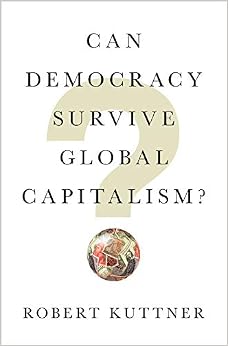
Can Democracy Survive Global Capitalism?, by Robert Kuttner

PDF Ebook Can Democracy Survive Global Capitalism?, by Robert Kuttner
Understanding is a process that will certainly be undergone by all individuals in every age. In this case, we have always guides that must be accumulated as well as check out. Can Democracy Survive Global Capitalism?, By Robert Kuttner is among guides that we constantly recommend for you in learning. This is the way just how you discover pertaining to the topic. When you have the visibility of guides, you need to see how this publication is really advised.
A publication is much related to reviewing activities. Reserve will be absolutely nothing when none reviews it. Checking out will certainly not be finished when guide is just one of the subjects. Nonetheless, in this modern period, the presence of book is growing sophisticatedly. Numerous resources make the both book in published and soft documents. Having the soft documents of publication will certainly ease you to make genuine to read it. It can be saved in your numerous gadget, computer, CD, laptop computer, also the gadget that you always bring anywhere. It is why; we show you the soft data of Can Democracy Survive Global Capitalism?, By Robert Kuttner as one of matter to read.
Never doubt with our deal, due to the fact that we will certainly always give exactly what you need. As such as this upgraded book Can Democracy Survive Global Capitalism?, By Robert Kuttner, you might not locate in the other location. But below, it's very simple. Merely click and download and install, you can have the Can Democracy Survive Global Capitalism?, By Robert Kuttner When simpleness will relieve your life, why should take the complex one? You can purchase the soft data of the book Can Democracy Survive Global Capitalism?, By Robert Kuttner here as well as be participant people. Besides this book Can Democracy Survive Global Capitalism?, By Robert Kuttner, you could also find hundreds lists of the books from many resources, collections, authors, and writers in around the globe.
From some conditions that exist from the books, we constantly end up being curious of just how you will get this book. However, if you feel that hard, you could take it by complying with the link that is supplied in this web site. Locate also the various other checklists of the books that can be had and also read. It will not limit you to just have this publication. However, when Can Democracy Survive Global Capitalism?, By Robert Kuttner ends up being the first choice, just make it as genuine, as what you actually intend to seek for as well as get in.
Review
“Democracies govern nations, while global capitalism runs the world. Robert Kuttner provides a clear-eyed, intellectually riveting account of how the inevitable tensions between the two have fueled neofascist nationalism here and abroad, and why the response must be a new progressive populism rooted in democracy and social justice. Timely and compelling.†- Robert B. Reich, chancellor’s professor of public policy, University of California at Berkeley“Robert Kuttner combines economic acumen, a gift for narrative, and genuine passion in his persuasive new book. In his telling, the issue isn’t whether national economies should be open to foreign trade or finance. It’s whether the rules of the global economy are set up to benefit?ordinary citizens or merely economic elites.†- Jacob S. Hacker, Yale University and coauthor of Winner-Take-All Politics“Kuttner brilliantly brings together two strands of thought: explaining both the economics and politics of global capitalism and how our society has abandoned core principles of fairness and equality. The rise of inequality helped pave the way for Donald Trump―a figure out of step with basic American values. Kuttner reminds us of the urgency with which we need to get back to a more just society.†- Joseph E. Stiglitz, Columbia University, winner of the Nobel Prize in Economics and best-selling author of The Price of Inequality“Standing on the shoulders of Karl Polanyi, Bob Kuttner revives the lost art of political economy in this absorbing and important analysis of wild markets, assaults on labor, and profound changes to institutional rules.†- Ira Katznelson, Columbia University and author of the Bancroft Prize–winning Fear Itself: The New Deal and the Origins of Our Time“Democracy is no longer writing the rules for capitalism; instead it is the other way around. With his deep insight and wide learning, Kuttner is among our best guides for understanding how we reached this point and what’s at stake if we stay on our current path.†- Heather McGhee, president of Demos“Conventional wisdom has it that our income disparities and dysfunctional politics are the consequence of inexorable and uncontrollable developments in technology, market competition, and globalization. As Robert Kuttner argues in this superb book, they are instead the result of our own policy choices.†- Dani Rodrik, Harvard University and author of Straight Talk on Trade and The Globalization Paradox
Read more
About the Author
Robert Kuttner, cofounder and coeditor of The American Prospect, is a former columnist for Business Week, the Washington Post, and the Boston Globe. He holds the Ida and Meyer Kirstein Chair at Brandeis University, and lives in Boston.
Read more
Product details
Hardcover: 384 pages
Publisher: W. W. Norton & Company; 1 edition (April 10, 2018)
Language: English
ISBN-10: 0393609936
ISBN-13: 978-0393609936
Product Dimensions:
6.5 x 1.3 x 9.6 inches
Shipping Weight: 1.5 pounds (View shipping rates and policies)
Average Customer Review:
4.0 out of 5 stars
31 customer reviews
Amazon Best Sellers Rank:
#192,487 in Books (See Top 100 in Books)
In what is the most non-partisan, insightful, and exhaustive analysis of our current global economic, political, and social malaise of the last three decades, economist Robert Kuttner explains that the problem is neither globalization nor technology. The problem is laissez-faire capitalism and the asymmetric power it allocates to bankers, investors, and speculators.While Kuttner doesn’t cover the first one in much detail, there have been three periods of aggressive financial deregulation in the industrial era. And each was ultimately empowered, indirectly, by the need to finance war debt. The first was the war debt of the Civil War, which was ultimately financed by crushing debtors and rewarding creditors, an asymmetric victory that gave rise to both the gilded age and the cooperative movement, ultimately called the populist movement, of the late 19th Century. The second occurred between the world wars and ultimately gave rise to the Fascists, Hitler and Mussolini.The third was different and followed World War II. It was different because the US and European powers, for reasons Kuttner explains in detail, decided to regulate their financial markets. What followed was a period of unprecedented economic growth and income equality.There are two primary constituents of all modern economic activity. One is labor, which I broadly define to include everyone who actually contributes directly to the manufacture of products or the provision of services. The second are the capitalists themselves—the bankers, investors, and speculators that trade in the capital that every business needs to operate and expand.Kuttner’s ultimate message, I believe, is that the interests of these two groups is in natural conflict. But when their interests are balanced, as they were following World War II, growth and prosperity is optimized. When one or the other group is favored, growth is compromised, inequality is accelerated, and ultimately, heated divisions boil to the surface. Left unaddressed, totalitarianism steps in to fill the void.We are currently in a period of unfettered capitalism in which banks, investors, and speculators are both operating with no oversight and no regulatory controls and reaping an increasing percent of economic growth and wealth. For the US it is a process that began in the 1970s (For Kuttner, 1973 was the watershed year.) and has accelerated ever since.Aggravating the excesses, the CEO suites of our corporations today (I once counted myself among them.) are no longer occupied by businesspeople. They are occupied by capitalists, who through their actions, value their shareholders far more than their employees and the communities in which they operate. That, of course, is what we incentivize them to do, but it is the reality nonetheless. And it is a big change from the corporate world I entered in the 1970s.Kuttner correctly points out that technology is not the culprit. I believe, however, that technology has empowered the excesses of laissez-faire capitalism for a couple of reasons. The first is a by-product of technology that is often over-looked: Among the great powers of technology is its ability to dumb itself down. In my four decades in international business I was involved with building overseas plants from the 1970s on. Early in that period, while it is always dangerous to generalize, it often took decades to bring a greenfield plant up to the efficiency levels of established plants in the US. One plant I was involved with in Mexico in the 80s never actually got there in my time with the company. Another plant I helped to open in China in the 00s, on the other hand, got there in just a few years. And the difference had nothing to do with the laborers themselves. The difference was the technology of production. (Obviously differences in the complexity of the production process plays a role, but the two plants I reference were very comparable on that front.)The second impact of technology has to do with its impact on overall health and longevity. People are living longer, by a lot. And that’s a very good thing, indeed, but we have not adapted our social and economic expectations (when to retire, on the one hand, and business’ infatuation with youth, on the other) to that new reality.The point is not to reject technology. That is not a practical choice anyway. Technology will flourish whether we want it to or not. (And we should want it to.) The only choice we have is whether to manage it or not and, to date, the libertarians of Silicon Valley and their allies in the venture capital world have convinced us not to.In the end, capitalism comes in a variety of shades and flavors. At the moment it would be hard to find a way to favor the bankers, investors, and speculators any more than we are, both here in the US and in Europe. And we’re paying the price in terms of extreme exclusion, income inequality, stagnant economic growth, and social injustice.And, of course, those developments have put democracy itself at risk. As Kuttner points out, Donald Trump is a byproduct of the factors that put democracy at risk, not the spark. And removing him will change nothing if we don’t, at the same time, put the bridle back on our capitalism. Government regulators are not the enemy if, and it’s a big if, we put the right people in that role.Contrary to myth, the US has never been a free market economy when it comes to capital. Jefferson himself warned us about the tyranny of the corporation unhinged from society and the real economy. The bankers, however, won on three occasions: the first led to the market crash of 1929, the second led to the Great Depression, and we are living in the third. In each case, the rich did fine; they got richer. It is we, the rest of us, who suffered.Kuttner sums it up best: “Democracy is more fragile than we would like it to be. It is particularly vulnerable when the economy deserts the common people.†He cautions, moreover, that liberalism is not, by itself, enough. “…liberalism and democracy do not necessarily go together. It is possible to be nondemocratic, but relatively liberal in accepting core values of the rule of law and respect for the individual.†Meaning, of course, we should evaluate other nations not by the extent to which their political system mirrors our own, which our foreign policy makers often do, but on the democratic outcome achieved.The problem is not political party affiliation. The challenge facing every form of government is its ability to accommodate and integrate large minorities of marginalized people, either economically or politically. Both political parties in the US have failed different groups of marginalized people, but they have failed nonetheless.In different senses, both the Republicans and the Democrats are right and wrong. “This will require much stronger democratic institutions and a radical transformation of capitalism into a far more social economy.†We don’t just need to “drain the swamp†in Washington. We need to fundamentally transform the status quo on Wall Street and in Silicon Valley, too.In the end, Kuttner is guardedly optimistic: “This is no basis for complacency, but reason to resist despair.â€I can’t recommend this book strongly enough. Thank you, Mr. Kuttner.
For years we've been told that allowing China unfettered access to global trade opportunities would expose its citizens to democracy, and ultimately make that nation more democratic. That hasn't happened, while elsewhere we're seeing a backlash against both global markets and liberal democracy. Now comes Robert Kuttner with the opposite theory - that global capitalism is undermining democracy.Ultra-nationalists who reject both the EU and the doctrine of liberal trade are now the 2nd or 3rd largest party in much of Europe. Democracy is under siege. This reaction is compounded by resentment of immigrants and refugees, as well as resurgent racism. Nothing in the structure of the late-20th-century economy compelled reversion to an unregulated 19th-century market. This was a political shift. When American government turned back into an ally of finance in the 1970s and continued emphatically into the 1980s, goals for the global system reversed. Today's version of globalization is profoundly antidemocratic. Global trade agreements narrow the space for national policy and weaken government's ability to contain capitalism. Meanwhile, the popular revulsion against the results of globalization is elevating antidemocratic leaders, parties and ultranationalionist sentiments. The rise in terrorism and fear of aliens also promotes support for anti-foreign strongmen.Post-WWII, banks could not do business outside the borders of their home countries. There was no speculation in currencies because exchange rates were fixed. Categories of financial products that operate globally today add to system ungovernability and instability - eg. credit default swaps that did not exist then. Originally interest rates could be kept low, providing cheap capital without worry that easy money would fuel speculation and bubbles. This also constrained the wealth and power of financial elites. Since then elites have won the policy debates but lost the citizenry.Globalization also accelerates cross-border movements of people/cheap labor. Remittances have become an important source of income for much of the third world. Meanwhile, government and politics in the democracies are hobbled by paralysis in the face of escalating problems. In the U.S., three decades of cynical Republican and corporate blockage of economic remedies discredited government and politics, paving the way for Trump.In the history of the West, democracy has expanded by limiting the power of capitalists. When that fails, dark forces are often unleashed. Recently Democrats have been forced to rely more on raising money than group activity - eg. via the rise of advertising, opposition research, computer analyses. This has pushed that party to the right, while at the same time Republicans have also moved further to the right. Both seek big donations from Wall Street.American corporations are now making record profits, yet workers' wages have stagnated over the last few decades as productivity increased. Global capitalism has allowed U.S. corporations to step around decades of protections (minimum wage, child labor, labor unions, health and safety regulations, local taxes, etc. restrictions). However, deregulated capitalism returned the upper hand to the elites - and they began dominating politics again. Many contend that today's problems are caused by immigration and technological change. Kutter contends that 'Democracy no longer writes the rules for capitalism - instead it is the other way around.During the period between the two world wars, free-market liberals in France, Britain, and the U.S. They put debt collection ahead of economic recovery. Up until the German election of July 1932 that made Nazis the largest party, the governing coalition was practicing economic austerity commended by Germany's creditors. tried to restore the pre-WWI laissez-faire system.The New Deal shackled private finance in a manner that has not been equaled before or since. The 1933 Glass-Steagall Act removed an entire category of speculation and conflict of interest by requiring stock brokerages and investment-banking houses to be divorced from commercial banking. Interest rates charge borrowers and paid depositors were also tightly regulated - to discourage forms of competition that could damage solvency. Nationwide banking was prohibited and branch banking limited. It was the behemoth banking conglomerates, liberated from New Deal restraints, that engaged in complex speculation and excess leverage to reap immense speculative profits - then crashing in 2007-8. Credit evaluation was not delegated to third parties, instead performed directly by loan officers. There were no significant bank failures after 1934.In the U.S. and Britain, the rate of inflation tended to exceed the interest rate on public debt for three decades after WWII. Thus, the average burden of public debt declined over time.The economic slowdown of the 1970s brought the resurgence of business influence, laissez-faire ideology, and right-wing politicians to dismantle much of New Deal financial regulation.Trade unions prevalent in Europe after the war were often recognized as partners, and also understood the need for not pricing themselves out of the market. Key contracts were set at national levels - factory-level settlements that were more generous were frowned upon as destabilizing.The share of U.S. income going to the top 1% fell from 36% of total income in the 1920s to about 24% in the 1950s, to less than 15% in several European nations while unemployment was less than 2% for two decades.In the 1970s a laissez-faire financial system and global disorder returned after 1973, unemployment rose and wages came under pressure. Women entering the labor force in large #s continued the growth of more equal household income for a few more years. Then, as capital was deregulated, incomes took off again at the top, supply-side theories gained ground and taxes were cut - especially for the well-off.The Iron Law of Capitalism - return on invested capital tends to exceed the rate of economic growth, and wealth thereby becomes more concentrated over time.As Europe recovered after WWII and U.S. dollars flowed outward in the form of military aid and tourism, the U.S. current account balances became negative by about $1 billion/year in the early 1950s and $3 billion/year by the late 1950s. Offshore dollars could then be loaned out to finance European growth, with less regulation. By 1960, dollars held offshore exceeded the value of gold held in Ft. Know by $19 billion. By 1968, Vietnam War spending overseas added to the problem, creating a run on the dollar, a 10% tax on imports, wage/price controls, and the price of gold was left to the markets. Fixed exchange rates ended, along with currency controls and tight financial regulation. Rising imports were acerbated by the Arab oil embargo - quadrupling the price of oil. Now governments needed to run their economies less in service of steady growth and full employment, and more to keep the trust of financial speculators wanting high interest rates, less taxes on capital, balanced budgets, limited social outlays. The U.S., however, went into deficit spending and every growing trade deficits.
Can Democracy Survive Global Capitalism?, by Robert Kuttner PDF
Can Democracy Survive Global Capitalism?, by Robert Kuttner EPub
Can Democracy Survive Global Capitalism?, by Robert Kuttner Doc
Can Democracy Survive Global Capitalism?, by Robert Kuttner iBooks
Can Democracy Survive Global Capitalism?, by Robert Kuttner rtf
Can Democracy Survive Global Capitalism?, by Robert Kuttner Mobipocket
Can Democracy Survive Global Capitalism?, by Robert Kuttner Kindle